Air District recommends $30 million to City of Benicia, $10 million to school district
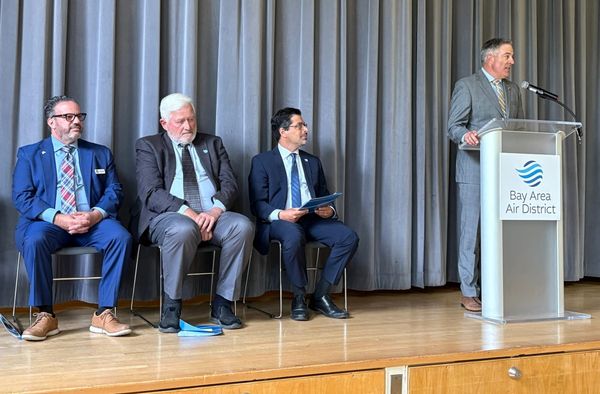
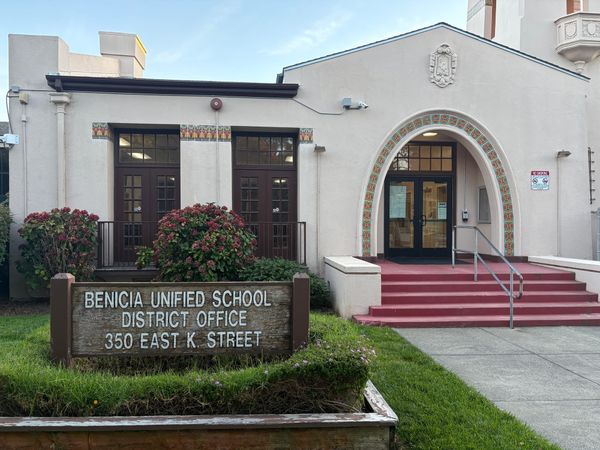
Bay Area Air District staff recommended the City of Benicia get $30 million and Benicia Unified School District get $10 million in Valero Refinery settlement funds in the Catalyst Grant.
Bay Area Air District staff recommended the City of Benicia be awarded $30 million and Benicia Unified School District be awarded $10 million in Valero Refinery settlement funds, according to Board meeting documents published Thursday.
The City and the School District are competing for chunks of $40 million available from the Air District’s Catalyst Grant, which is designed to fund Benicia projects to reduce air pollution and improve health outcomes, as well as build economic resilience for a just transition from a refinery-based economy. A staff presentation notes a third application did not meet eligibility requirements.
The Air District Board of Directors is scheduled to consider awarding the grant at its Sept. 2 meeting.
“The City of Benicia is incredibly grateful and appreciative of the confidence the Air District staff have bestowed on the citizens of Benicia to use these dollars in a manner that will improve our air quality, public health and the redevelopment of the refinery property,” City Manager Mario Giuliani said to The Benicia Bridge in an emailed statement.
“While this grant over 5 years will not make up for the loss of the revenue from the refinery, it will, however, help to make possible a brighter future for Benicia’s next generation.”
Both the City and the School District requested more money than staff is recommending. Both agencies were required to resubmit revised applications to address perceived weaknesses, including reliance on fossil fuels, deferred maintenance activities, and “heavy reliance on consultants and subcontractors.”
The Air District’s Benicia Catalyst Grant is one of several grant opportunities distributing remaining funds from its record-setting $82 million fine against Valero for a history of violations at its Benicia refinery, including undisclosed chemical releases dating back to 2003. Additional grants with smaller funding pots will be awarded in the coming months.
Mayor: This won’t solve the city’s finances
Mayor Steve Young told The Benicia Bridge “it’s an important and consequential step for the city” that has been a long process. He is among the officials who worked to change how fee money is distributed. Young also sits on the Bay Area Air District Board of Directors.
“This is the first example of how you can use some of this money to transition from a fossil fuel-dependent community to one that is looking toward green energy development,” Young said. “I’m grateful for the work the district did to allow this to happen and to get to this point. This is a one shot to get a significant amount of money to do real projects that are going to benefit the environment and the community.”
Still, the one-time large grant won’t support the city’s long-term needs, and he emphasized the need for new tax revenue from a proposed property-transfer tax.
“This money isn’t going to the general fund, to cops and firefighters. This isn't going to fund the regular operations of the city [and] because of the age of the city, a lot of infrastructure is breaking down,” Young said.
City of Benicia Proposal
In its revised application, the City applied for $35.6 million to fund four projects.
- Upgrades to Benicia's Civic Center to eliminate fossil fuel dependency and improve solar reliability. ($8.6 million)
- Electric vehicle charging infrastructure, active transportation and pedestrian safety improvements. ($8 million)
- Develop plans for Benicia’s transition from a refinery-dependent economy to an economically resilient future. ($11.4 million)
- Protect residents from air quality and safety threats and improve air quality. ($7.5 million)
Benicia Unified School District Proposal
In its revised application, the School District applied for $20 million to fund two projects. (A $4 million “Career Pathways” project was removed from the updated application.)
- Facility upgrades to improve energy efficiency, eliminate fossil fuel dependency and improve student health. ($15.5 million)
- Create a districtwide Student Wellness system focused on preventing health-related absenteeism through proactive intervention. ($5 million)
Correction: This story was updated Sept. 2 at 12:30 p.m. to correct an error in the amount proposed for Benicia Civic Center clean energy improvements.