City of Benicia awarded ‘groundbreaking’ $30 million in Valero settlement money for just economic transition and clean air projects
The City of Benicia will receive $30 million of Valero settlement funds in a landmark Bay Area Air District grant to improve air quality and build a new local economy without a refinery.
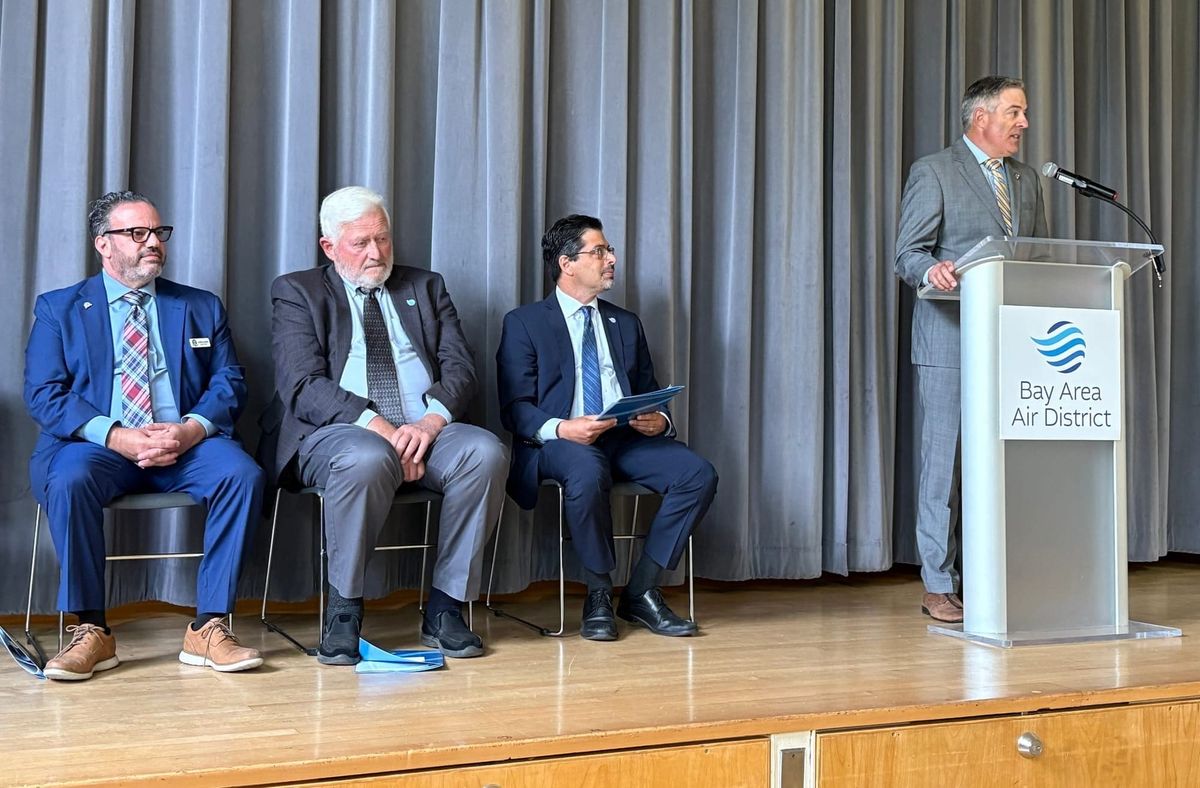
The City of Benicia will receive $30 million of Valero settlement funds in a landmark grant to improve air quality and build the foundation for a new local economy without a refinery.
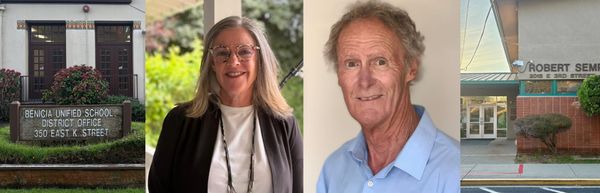
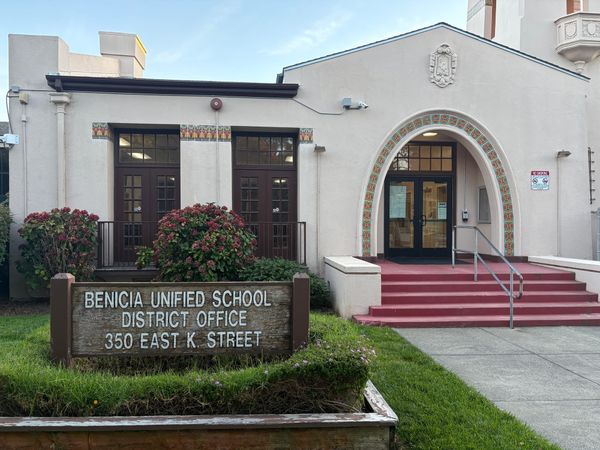
The Bay Area Air District Board voted Wednesday to award $30 million to the City and $10 million to Benicia Unified School District over five years.
The award is the first in a “groundbreaking” new Air District process that directs money generated from air quality fines back to impacted communities.
Monies slated for Benicia stem from Valero’s Benicia refinery record $82 million fine in 2024. City programs to be funded by the grant include clean air projects, like planting 600 new trees, upgrading city buildings for energy efficiency, purchasing electric police vehicles and a fire engine, new car chargers, expanding bike and pedestrian ways and upgrading the city’s solar energy system.
The grant also includes large investments in planning for and recruitment of new industry and workforce transition under the vision of just economic development in a post-petroleum economy.
“This is a significant investment by the Air District in the future of Benicia, and it comes at a consequential time in our history as the city prepares for the economic and operational impacts associated with the closure of the Valero refinery,” Mayor Steve Young said at a press conference at Benicia’s Community Center on Thursday.
“[It’s] especially meaningful and appropriate that these penalty funds are coming back to Benicia, as we are the ones who suffered for more than a decade from unreported toxic emissions from the refinery,” Young said. “It’s certainly the biggest grant the city of Benicia has ever received, by far.”
Grant does not solve city's finance woes
City officials emphasized that the grant does not solve the city’s financial problems. Instead, this grant is part of a transition plan that also looks to city residents to pass new taxes this November. The Air District grant funds can only be used to pay for specific, approved projects that meet specific goals and can’t be used on general expenses like city services.
“It's important to know that this investment is not a deliverance from the loss of industry of Valero,” City Manager Mario Giuliani said Thursday. “It's going to take the entire community coming together to figure out how we can find new sources of revenue in order to sustain the community that we want.”
Valero’s Benicia refinery was fined a record $82 million in 2024 for air quality violations stemming from a 2019 inspection. Air District investigators discovered decades of unreported emissions of toxic pollutants from a hydrogen vent stack at levels that were hundreds of times the legal limit – including cancer-causing benzene, according to the Air District.
Young thanked the Air District, and then publicly thanked Valero, saying the company could have fought the violations in court. “The only ones who would benefit would have been lawyers. Instead, they agreed to the settlement, and they promptly paid the fine.”
The refinery shuttered in April this year, resulting in hundreds of lost jobs, which Young described as a “mixed bag” for Benicia. Valero continues to operate in Benicia by importing refined oil.
Valero's Benicia refinery, seen here in archival footage, was idled in April. Just last month, Valero was issued more than 20 new notices of air quality violations in Benicia. (Adobe)
“For the residents, it’s a win for public health,” Young said. “There is sort of an immediate hit for …restaurants and hotels and some of the other businesses in the industrial park who sell products to Valero. That's obviously gone.”
The City expects an annual revenue loss of between $7.5 million and $8 million via a combination of lost property tax, water sales and an electrical energy user tax. “In the long run,” Young said, “I think we're going to be better off, and we are now on a path that will hopefully lead us to sustainability.”
Funding Benicia’s plans for a post-refinery economy
The City’s grant application proposed four categories of projects – clean facilities, clean mobility, just economic transition, and community air quality – including both capital improvements and programmatic planning.
To support a just economic transition away from petroleum, the City designated about $11 million in its grant application to coordinate and manage “safe Valero refinery decommissioning” and to build a foundation to establish a post-petroleum economy for new industry.
Originally, the Air District’s grant program had limited funding only to projects that promoted air quality and improved public health. Mayor Steve Young – who is also a member of the Air District Board – and other city officials lobbied the district to add a new granting goal to support economic development.
His work was celebrated at the Air District Board Meeting Wednesday. “Steve, oh my god, Steve!” said County Supervisor and fellow Air District Board Member Monica Brown. “You have just done everything to make this happen.”
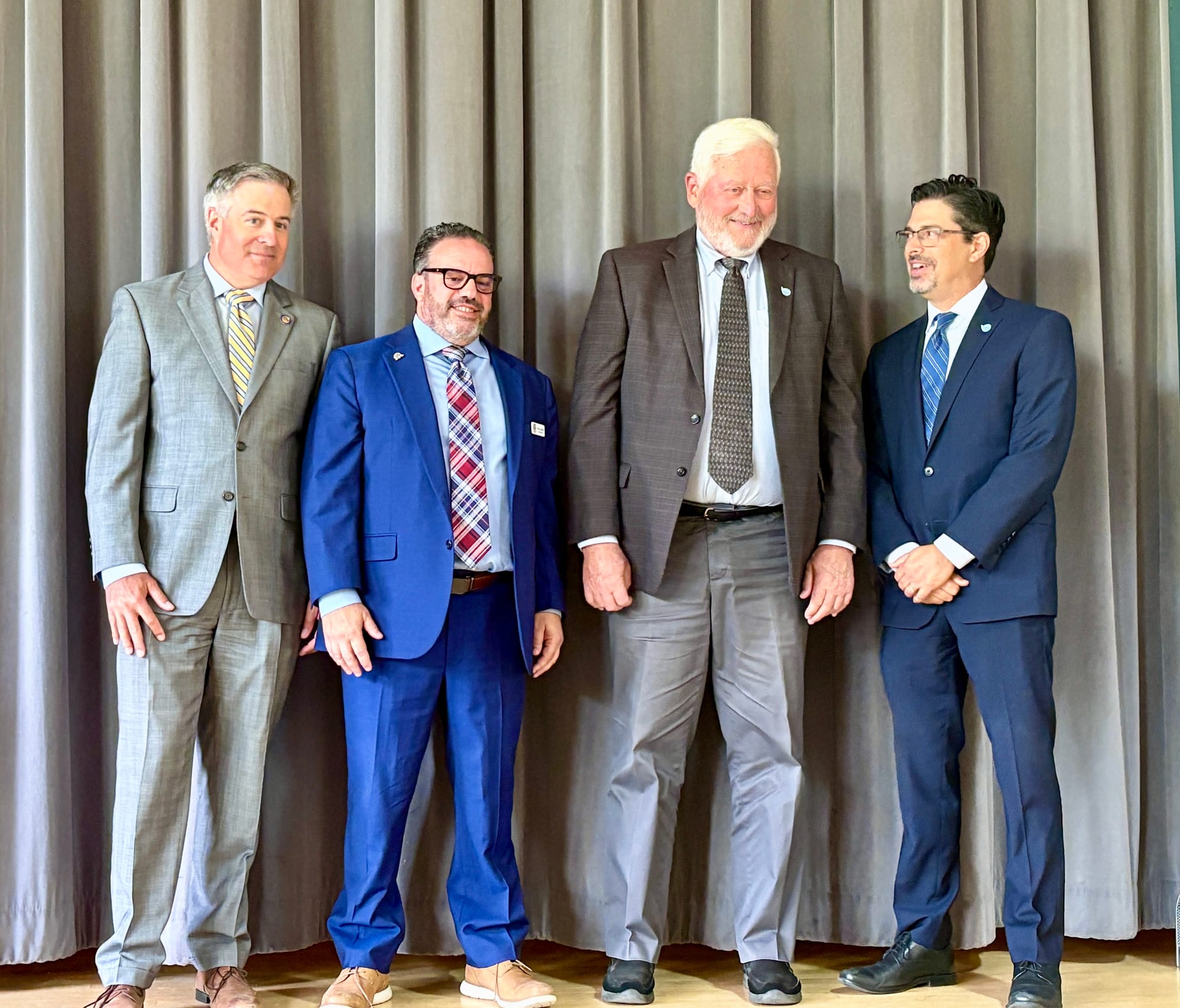
With funds for those kinds of economic development projects, “this investment paves the way for a new economy in our industrial park,” Giuliani said.
“This $30 million, in large part, will assist the city of Benicia from transitioning from one economy to a new one. Right now, we have a zoning code from the 1970s, a General Plan from the 1990s, anchored by an industry of the 1960s. Ladies and gentlemen, we cannot build the future on that,” Giuliani said.
Those efforts include writing a new General Plan, a new Industrial Zoning Code, and a Clean Industry Revitalization Initiative with workforce pathways that target participation from impacted workers and recruitment for industries like battery manufacturing, green energy, port-related logistics and shipbuilding, according to the grant application.
“Benicia is going to be a booming economy in the ’30s and ’40s. This will be the place to be, not only in Solano County but the entire Bay Area region. And that's something for which all of us in Benicia are most excited about.”
It’s an optimistic vision that Giuliani said will be a model for other California communities.
“We are all going to have an important role in the legacy of what California will do in the eight remaining cities that have a refinery, because it's only a matter of time before they, too, go through the process of decommissioning and redevelopment,” Giuliani said. “Because of the work of this organization, we are going to write the playbook for California.”
Benicia as a ‘precedent’ in award process
Air District Board members and staff on Wednesday celebrated the grant award, saying that Benicia and the Air District have set a precedent and a model for how settlement funds will be directed back to impacted communities.
Generally, regulatory agencies absorb penalty fines back into their general fund, with some monies eventually awarded to clean air grants. The Air District’s Community Benefit Fund model developed a few years ago creates a kind of “lock box” for fine money to be held for grants available to the community that was impacted by the violations, according to the Air District Executive Officer, Dr. Philip Fine.
“We don't want the violations, and ideally we wouldn't get any money because there are no violations,” Fine said at the press conference Thursday. “But when [and] if it does happen, we are able to try to repair some of the damage in the communities where the violations occurred.”
“What we are doing is groundbreaking,” said Lynda Hopkins, a Sonoma County supervisor and member of the Bay Area Air District Board. “Most government agencies that I interact with, when they receive fines from something, it goes to feed the internal bureaucracy… It goes back to the government. It doesn’t go back to the community.”
One complaint was made about the Air Board’s award on Wednesday when a Vallejo resident called in expressing outrage that Benicia would receive such a large sum, while residents of South Vallejo in particular experience higher rates of exposure to particulate matter and higher asthma rates.
Only Benicia organizations were eligible to apply for the largest $40 million pot of funding, or “Catalyst Grant,” from the Valero settlement money based on Air District analysis of who was most impacted by refinery pollution.
Surrounding communities, including Vallejo, were able to apply for smaller “Seed” and “Opportunity” grants from the Valero settlement fund, which will be awarded in October. A separate $20 million fund is also available to Richmond-area communities as a result of Chevron refinery violations.
While it’s unlikely that Benicia will ever see a pot of money this large from air quality violations again, Valero’s operation in Benicia paid another $3.25 million in April for another 118 violations between 2019 and 2023. And, the company has received notices of additional violations for ongoing operations even since the refinery closed.
Just last month, Valero was issued more than 20 new notices of air quality violations in Benicia.